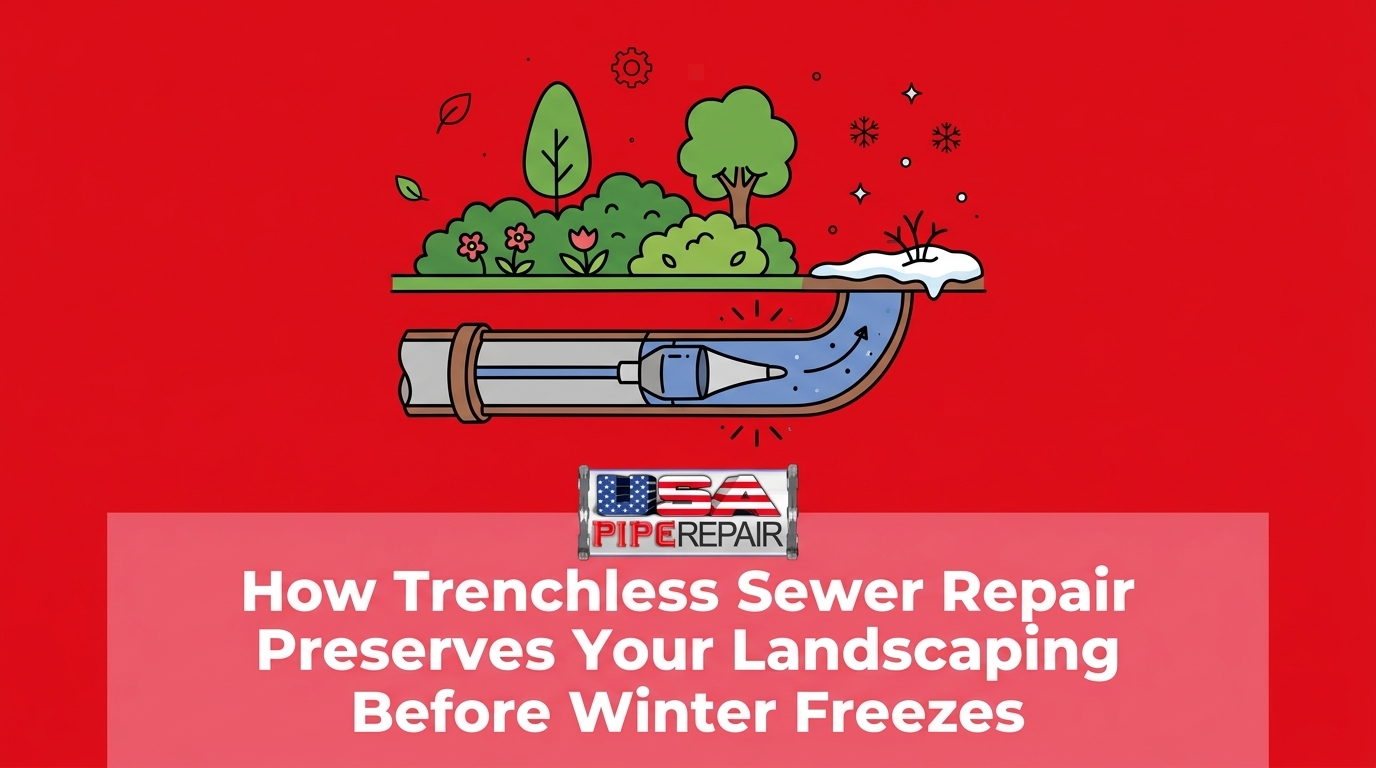
How Trenchless Sewer Repair Preserves Your Landscaping Before Winter Freezes
Home /
The Hidden Risks of Slow Drains as Temperatures Drop
Your bathroom sink takes minutes to clear, and the downstairs toilet gurgles every time the washing machine drains. These are not just minor household annoyances; they are early warning signs of a compromised main plumbing line. When our team at USA Pipe Repair shares local service expertise and area tips to prepare your home for colder weather, one recurring theme emerges from our daily service calls: existing pipe vulnerabilities become significantly more prone to failure as temperatures drop. A line that drains sluggishly in September can completely block up by November.
During the mid-fall / pre-winter transition, the ground begins to cool rapidly. Any grease, soap scum, or debris trapped in a partially blocked pipe congeals much faster in cold temperatures, turning a partial obstruction into a solid wall. Most homeowners ignore these early symptoms, hoping the drains will clear themselves. Unfortunately, ignoring a slow drain now often guarantees a complete sewer backup during the coldest months of the year.
The proactive approach: Addressing these vulnerabilities before the first freeze is critical. By taking action in mid-fall, you can utilize modern, non-invasive solutions to secure your plumbing infrastructure without destructive digging. This proactive approach prevents catastrophic backups and ensures your system flows freely regardless of the weather outside.
To learn more about your options, start by understanding trenchless technology, which serves as the foundation for modern trenchless sewer repair.
How No-Dig Technology Outsmarts Shifting Soil
The Problem: In our years of serving Midlothian VA, we have seen firsthand how the local soil composition presents a unique challenge for underground plumbing. The region features clay-heavy soils that expand aggressively when wet and contract sharply during dry spells. As the seasons change, these freeze-thaw cycles and moisture fluctuations cause the earth to shift constantly. This movement exerts immense hydrostatic pressure on rigid, aging cast iron or clay sewer pipes, eventually causing them to crack, offset, or collapse entirely.
The Cause: Traditional pipes rely on multiple joints to connect sections of the line over long distances. Whenever the ground shifts, these joints become the weakest links. The shear forces caused by expanding and contracting clay soil easily pull these connections apart. Once a joint is compromised or a crack forms, the structural integrity of the entire line is lost, leading to leaks, blockages, and eventual failure.
The Solution: Trenchless technology bypasses these vulnerabilities entirely. Instead of replacing the old pipe with another rigid material that will eventually suffer the same fate, our technicians install a flexible, durable liner that resists the shear forces of shifting earth. If you are exploring sewer pipe lining, you are looking at a permanent structural upgrade that outsmarts the local soil conditions.
The Mechanics of Seamless Pipe Lining
The most common method we use is Cured-In-Place Pipe (CIPP) lining. This process essentially builds a brand-new pipe directly inside the old, damaged one.
- Insertion: Technicians saturate a flexible felt liner with a specialized epoxy resin and pull or blow it into the existing sewer line through a small access point.
- Inflation and Curing: A calibration tube inflates the liner, pressing the epoxy firmly against the inner walls of the old pipe. Hot water, steam, or UV light is then used to cure the resin, hardening it into a solid, structural pipe.
- Elimination of Joints: The resulting “pipe-within-a-pipe” is completely seamless. Because there are no joints, there are no weak points for shifting soil to pull apart or for roots to infiltrate in the future.
Preserving Mature Trees and Historic Properties
One of the most significant advantages of modern pipe restoration is what happens above ground. Traditional open-trench excavation is a highly destructive process. Fixing a broken sewer line the old-fashioned way requires bringing heavy machinery onto your property to dig a deep trench from your home’s foundation all the way to the municipal connection at the street. This method tears up manicured lawns, destroys expensive hardscaping, and requires the removal of fences and retaining walls.
For homeowners in Midlothian VA, the preservation of historic landscaping and mature trees is a major priority. We frequently work on properties with decades-old oaks and established, custom driveways that would face massive collateral damage during a traditional dig. Trenchless methods require only one or two small access points—usually no larger than a few square feet. The surface above remains completely intact, preserving the aesthetic and historical value of the property.
The benefits of a non-invasive approach include:
- Protecting root systems: Trenching severs the critical root systems of mature trees, often killing them slowly over several years. Trenchless repair leaves these roots entirely undisturbed.
- Saving hardscaping: You avoid the massive expense of repaving a torn-up driveway or rebuilding a custom stone patio.
- Minimizing disruption: Your property doesn’t turn into a chaotic construction zone for weeks on end.
By choosing this advanced method, you ensure that major infrastructure repairs no longer mean sacrificing years of yard growth. Understanding the process behind no-dig sewer restoration reveals just how meticulously your surface landscaping is protected while the underground issues are permanently resolved.
Why Summer Droughts Lead to Fall Root Intrusions
The Problem: At USA Pipe Repair, we frequently receive calls from homeowners who are baffled when their plumbing suddenly slows down in October, seemingly out of nowhere. The root cause of this mid-fall / pre-winter plumbing crisis actually begins months earlier, during the peak heat of late summer.
The Cause: During dry, hot summer months, the soil loses its moisture. Thirsty trees and large shrubs send their root systems deeper and wider in a desperate search for water. An aging sewer pipe is a constant source of moisture, oxygen, and nutrients. Even a microscopic crack or a slightly loose joint in an underground pipe releases condensation into the surrounding soil. Tree roots detect this moisture and aggressively grow toward it, infiltrating the tiny fissures. Throughout late summer and early fall, these roots expand inside the nutrient-rich environment of the pipe, eventually forming a dense, hair-like net that catches toilet paper and solid waste.
The Solution: By the time you notice slow drains and gurgling noises in October, the root mass has already severely restricted the flow of wastewater. Trenchless lining is the ultimate solution we recommend for this seasonal cycle. Because the CIPP process creates a jointless, seamless interior wall, it permanently seals the cracks and gaps that roots exploit. Once the liner is cured in place, roots can no longer penetrate the system, breaking the cycle of annual snaking and clearing.

The Complications of Excavation in Frozen Ground
Waiting for a pipe to completely fail before taking action is always a stressful experience, but dealing with a total sewer collapse during the winter months elevates the situation to a logistical nightmare. Our crews know that the mid-fall / pre-winter window is your last opportunity to address underground infrastructure before the earth hardens.
Once the ground freezes solid, traditional pipe excavation becomes exponentially more difficult. Digging through frozen clay is akin to digging through solid concrete. The complications of winter excavation include:
- Heavier machinery required: Standard backhoes often struggle to break through the frost line. Contractors must bring in heavier, louder, and more destructive equipment to fracture the frozen earth.
- Extended timelines: What might be a two-day trenching job in October can easily stretch into a week-long ordeal in January due to the sheer difficulty of moving frozen soil.
- Increased collateral damage: Frozen ground fractures unpredictably. When heavy machinery rips up frozen chunks of earth, it causes significantly more damage to surrounding driveways, walkways, and dormant plant life.
- Household disruption: Dealing with a plumbing emergency means you cannot use your sinks, showers, or toilets. Enduring this disruption when temperatures are below freezing is miserable for any family.
Positioning a proactive trenchless repair in the fall is the strategic way to bypass these winter complications entirely. The no-dig approach requires minimal ground penetration, making it vastly superior, but completing the work before the frost line sets in ensures the smoothest, fastest possible restoration of your system.
Increased System Strain During Holiday Gatherings
Beyond the physical changes in the soil and weather, the late fall and winter months bring a significant change in how your home operates. Household water usage spikes dramatically starting in November. Between hosting Thanksgiving dinners, having family stay over for the winter holidays, increased cooking, and running extra loads of laundry for guests, your plumbing system works overtime.
A partially blocked sewer line might function adequately under normal, everyday use. If your line is currently running at 40% capacity due to root intrusion or scale buildup, it might handle the daily showers of a three-person household without backing up. However, when you double or triple the wastewater volume during a holiday gathering, that 40% capacity is instantly overwhelmed—a pattern we see often during emergency calls every holiday season.
The reality of a holiday backup: There is immense inconvenience in dealing with a plumbing emergency while hosting family. Toilets overflow, sinks refuse to drain, and the entire household comes to a standstill. Clearing and lining the pipe during the mid-fall / pre-winter window ensures that your system has reliable, 100% capacity when it is needed most. You gain the peace of mind knowing your home can handle the heavy usage of the holiday season without failing.
Identifying Vulnerabilities Before the First Frost
The biggest challenge with underground plumbing is that it is entirely out of sight. You cannot simply look at your lawn and know the condition of your sewer line. The only way to know the exact health of an underground pipe is through a professional, high-definition camera inspection. October is the ideal window to assess the system, identify vulnerabilities, and schedule trenchless work if needed.
This diagnostic step requires specialized equipment and trained professionals; it is not a DIY project. Here is how our team’s assessment process works:
- Accessing the Line: A technician locates your main cleanout, usually situated in the yard or basement, providing direct access to the sewer line.
- Inserting the Camera: A high-resolution, waterproof camera attached to a flexible fiber-optic cable is fed into the pipe.
- Real-Time Video Feed: The technician views the interior of the pipe on a monitor in real-time, recording the footage to document any damage.
- Mapping the Damage: Using a radio transmitter on the camera head, the technician can pinpoint the exact depth and location of any blockages or breaks from above ground in Midlothian VA.
What a Professional Assessment Reveals
A thorough inspection eliminates guesswork. Instead of blindly snaking a drain, sewer camera inspections provide hard evidence of the pipe’s condition.
| Symptom Found | What It Means for Your System |
|---|---|
| Heavy Root Intrusion | Roots have broken through joints or cracks; the pipe needs clearing and lining to prevent regrowth. |
| Bellied (Sagging) Pipes | The soil has shifted, causing a section of the pipe to sink and hold standing water and waste. |
| Scale Buildup | Cast iron pipes are rusting from the inside out, restricting flow and snagging debris. |
| Longitudinal Cracks | The pipe is failing under soil pressure and is a prime candidate for immediate trenchless restoration. |
By evaluating the structural integrity of the existing pipe material, our professionals can determine exactly which trenchless method will provide the most durable, long-lasting fix.
Securing Your Plumbing System Ahead of Winter Weather
Addressing slow drains and gurgling toilets now is the most effective way to prevent severe winter emergencies and protect your property’s valuable landscaping. The mid-fall / pre-winter season offers the perfect opportunity to evaluate your underground infrastructure before freezing ground and heavy holiday usage create a perfect storm for pipe failure.
Modern trenchless technology offers a durable, permanent solution without the chaos, destruction, and extended timelines of a traditional dig. By acting proactively, you preserve your mature trees, protect your driveways, and ensure your home is ready for whatever the winter months bring.
Do not wait for a complete system backup to take action. Explore your options for permanent pipe restoration and secure your home’s infrastructure today by looking into professional trenchless sewer repair.
Frequently Asked Questions
How does trenchless sewer line repair work?
Trenchless sewer line repair works by creating a new pipe inside your existing damaged line without the need for heavy excavation. Technicians insert a flexible, epoxy-saturated liner into the old pipe through a small access point. Once inflated and cured with heat or UV light, the resin hardens into a seamless, highly durable pipe. This restores the structural integrity of the sewer line while leaving your surface landscaping completely intact.
Can trenchless repair fix tree root damage?
Yes, trenchless repair is highly effective at fixing and preventing tree root damage. Before the repair begins, our technicians use specialized descaling and hydro-jetting tools to completely clear the existing roots from the line. Once the new epoxy liner is cured in place, it creates a jointless, seamless interior that permanently seals the cracks roots previously exploited, ensuring they cannot re-enter the system.
Why is fall the best time for sewer line inspections?
Fall is the ideal time for sewer line inspections because it allows you to catch damage caused by summer root growth before winter weather sets in. Assessing the pipes in October gives you time to perform necessary repairs before the ground freezes solid, which makes traditional excavation nearly impossible. Furthermore, ensuring your pipes are clear in the fall prevents disastrous backups during high-usage holiday gatherings.
Is trenchless sewer repair worth it?
Trenchless sewer repair is widely considered worth the investment because of the immense savings in collateral damage. While the materials and specialized equipment have a cost, you avoid the massive expense of repaving driveways, rebuilding patios, and replacing mature landscaping destroyed by traditional trenching. It also significantly reduces the time your household is without plumbing, making the process far less disruptive.
What are the disadvantages of trenchless sewer repair?
The primary disadvantage is that trenchless methods cannot be used on pipes that have completely collapsed or lost their structural shape. Because the new liner needs the old pipe to act as a host mold, a severely crushed line may still require traditional excavation. Additionally, if a pipe has a severe “belly” or sag that holds water, a liner will contour to that sag rather than correcting the slope.
How do freeze-thaw cycles affect aging sewer pipes?
Freeze-thaw cycles cause the soil surrounding your underground pipes to expand and contract repeatedly. This constant movement exerts immense hydrostatic pressure and shear force on rigid materials like clay or cast iron. Over time, this shifting earth pulls pipe joints apart and creates fractures, which leads to leaks, root intrusions, and eventual structural failure of the sewer line.
Can holiday water usage trigger a sewer backup?
Yes, the sudden spike in water usage during the holidays is a common trigger for major sewer backups. If a main line is partially blocked by roots or scale buildup, it may still handle the daily load of a standard household. However, when you add guests, extra showers, and increased cooking and laundry, the volume of wastewater easily overwhelms the restricted pipe, forcing sewage to back up into the home.
Schedule Service
Our Services
More About Us



Get in Touch With the Top-Rated Plumber in Richmond, VA Today!
See for yourself why we're the top choice for top-notch, budget-friendly general plumbing, drain cleaning, excavation, and sewer repair services. Complete client satisfaction is what we aim for every time. Contact us today by calling us or filling out the form to schedule an appointment or request assistance.
In Business Since: 2001
State Licensing
Trade: Plumbing
License #: 2705140622
Expiration: 11-20-2022
Trade: Landscape Service Contracting
License #: 2705140622
Expiration: 11-20-2022
Trade: Highway / Heavy Contractors
License #: 2705140622
Expiration: 11-20-2022
Trade: Master Plumber
License #: 2710066245
Expiration: 02-28-2022
Trade: Class A Contractor
License #: 2705140622
Expiration: 11-20-2022