Evaluating Trenchless vs. Traditional Sewer Repair Before Winter Freezes
Home /
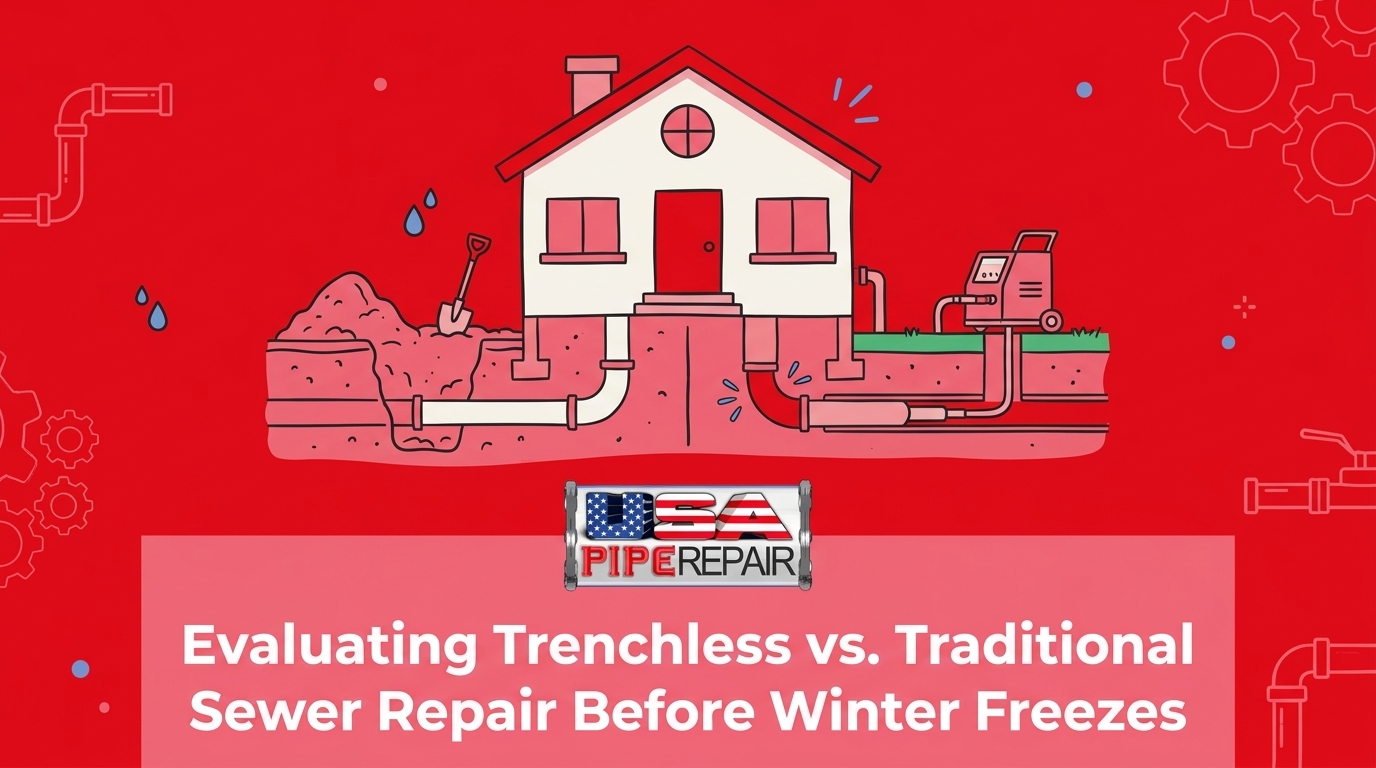
Navigating Sewer Line Repair Options Before Winter Hits
Your plumbing drains are backing up, and the threat of freezing temperatures is just weeks away. When facing a major underground pipe failure, navigating the various options comparisons for homeowners can feel overwhelming, especially with the clock ticking toward winter. In our experience at USA Pipe Repair, the primary dilemma most property owners face is deciding whether an aging, damaged pipe qualifies for a non-invasive repair method or if it requires full traditional excavation. Making this choice requires moving beyond personal preference and focusing entirely on the structural viability of the existing sewer line.
With mid-fall pre-winter preparation in full swing, establishing the right path forward is critical before the ground freezes solid and complicates any necessary yard work. By evaluating the mechanics of each method, you can make an informed, timely decision that protects your property and restores your plumbing infrastructure. For a deeper dive into the foundations of these methods, understanding trenchless technology is the first step toward a permanent solution.
The Urgency of Fall Diagnostics
Waiting to address a failing sewer line is always a gamble, but doing so right before winter introduces significant logistical hurdles. When the ground freezes, the soil hardens, making excavation exponentially more difficult and disruptive. Furthermore, water trapped inside compromised pipes can freeze and expand, turning a minor crack into a catastrophic pipe collapse overnight. Our team typically sees this seasonal reality make mid-fall the absolute final window for proactive, controlled sewer repairs.
Analyzing the Structural Approach: Trenchless vs. Traditional Methods
To make an informed decision, it is necessary to bypass basic definitions and dive directly into the technical mechanics of how each method structurally addresses pipe damage. Trenchless technology and traditional excavation are not merely different ways to dig; they represent fundamentally different engineering approaches to pipeline restoration.
The Mechanics of Cured-In-Place Pipe (CIPP) Lining
CIPP lining is an advanced structural solution, not just a temporary patch. Our technicians frequently recommend this method because it involves inserting a flexible liner saturated with a specialized epoxy resin into the damaged pipe. Once positioned correctly, the liner is inflated to press tight against the interior walls of the old pipe. Heat or ultraviolet light is then applied to cure the resin, creating a solid, jointless, pipe-within-a-pipe. Because the new liner is seamless, it eliminates the joints where tree roots typically infiltrate, and it boasts a lifespan of 50 years or more under standard conditions.
The Mechanics of Pipe Bursting
When our camera inspections reveal a pipe is too damaged for lining but still follows a proper slope, pipe bursting offers another non-invasive structural approach. A hardened steel bursting head is pulled through the existing pipe, fracturing the old material outward into the surrounding soil. Simultaneously, it pulls a brand-new, high-density polyethylene (HDPE) pipe into the exact same space. This method completely replaces the pipe without requiring a continuous trench.
The Traditional Trenching Method
In contrast, traditional excavation involves the full physical extraction and replacement of the sewer line. Heavy machinery, such as backhoes and excavators, must dig a trench along the entire length of the pipe to expose it. The old pipe is manually removed, a new bed of gravel is laid down to establish the correct slope, and a new pipe is installed. While this method is highly disruptive, it allows our technicians to completely rebuild the surrounding soil structure and correct severe gravitational flow issues.
Comparing Timelines and Lifespans
The operational differences between these methods drastically impact the timeline of your mid-fall pre-winter preparation.
| Repair Method | Structural Approach | Typical Timeline | Expected Longevity |
|---|---|---|---|
| CIPP Lining | Internal resin curing (pipe-within-a-pipe) | 1 to 2 days | 50+ years |
| Pipe Bursting | Fractures old pipe, pulls in new HDPE pipe | 1 to 2 days | 50+ years |
| Traditional Trenching | Full physical extraction and soil rebuilding | Several days to weeks | 50+ years |
Protecting Property Integrity with No-Dig Solutions
When evaluating repair strategies, the preservation of the surface environment is a major factor. A pattern we see often is that the core problem with traditional excavation is that it requires tearing up everything situated directly above the sewer line. The cause of this destruction is the need for heavy machinery to access the pipe physically, which often leads to irreversible damage to carefully curated landscapes. The solution lies in trenchless technology, which requires only one or two small access pits, leaving the majority of the property entirely untouched.
Preserving Mature Trees and Landscaping
Mature trees are particularly vulnerable to traditional trenching. Excavators often have to sever major root systems to reach the sewer line, which can destabilize large trees or cause them to die off in the subsequent seasons. No-dig solutions navigate beneath these root systems, preserving the decades of growth that add character and shade to your property.
Safeguarding Driveways and Historic Features
In our daily work across Midlothian and surrounding parts of Virginia, we see residential properties featuring extensive hardscaping, custom driveways, and historic architectural elements that are difficult or impossible to replace. Providing modern, no-dig solutions that protect local Virginia landscaping, custom driveways, and historic properties is a core structural and logistical benefit of this technology. Tearing up a poured concrete driveway or a historic cobblestone path creates massive secondary restoration projects. Trenchless methods bypass these surface features entirely. If you are curious about the step-by-step mechanics of this preservation, exploring the process behind no-dig sewer restoration reveals exactly how the surface remains undisturbed.
Structural Disqualifiers: When Trenchless Isn’t an Option
Despite the immense benefits of property preservation, trenchless technology is not a universal fix. The existing pipe must meet specific structural prerequisites to host a liner or guide a bursting head. When a pipe fails these prerequisites, traditional excavation becomes the only safe and viable option for a permanent repair.
Heavily Bellied Pipes
The structural issue: A “belly” occurs when the soil beneath a section of the sewer line erodes or settles, causing the pipe to sag under its own weight. Because sewer systems rely on gravity to move wastewater, this sag creates a permanent pool of standing water and waste.
Why trenchless fails here: CIPP lining contours exactly to the shape of the existing pipe. If you line a bellied pipe, you simply create a newly lined bellied pipe. The sag remains, and the blockages will continue. Traditional excavation is required to dig up the pipe, fill the void, and physically rebuild the proper gravitational slope.
Fully Collapsed Pipes
The structural issue: When a pipe has completely crushed under the weight of the soil above it, the internal channel is lost.
Why trenchless fails here: CIPP lining requires an existing, open cavity to act as a host for the resin-saturated liner. If the pipe is flattened, there is no way to pull the liner through, nor is there a structure to inflate it against. In these severe cases, sewer line replacement via traditional excavation is mandatory to extract the crushed materials and lay a new line.
Severe Joint Separations and Massive Root Blockages
While hydro jetting can clear moderate tree roots, massive root intrusions that have completely displaced the pipe joints cannot always be navigated by trenchless equipment. If a pipe joint has separated by several inches, a liner may bulge outward into the soil rather than bridging the gap smoothly. A professional diagnostic assessment objectively determines these disqualifiers, ensuring you only invest in a method that will actually succeed.

How Virginia’s Climate and Soil Impact Older Pipes
Contextualizing this comparison requires looking closely at the local environment. Our USA Pipe Repair crews spend a lot of time educating homeowners on this: the problem of failing sewer lines in Midlothian and the surrounding regions is heavily influenced by the ground they are buried in. The cause is the unique behavior of Virginia’s clay-heavy soils, which expand and contract significantly depending on the season. The solution is understanding these cycles to time your repairs properly.
The Mechanics of Clay Soil Expansion
During wet spring and early summer months, clay soil absorbs massive amounts of water, expanding and putting immense hydrostatic pressure on underground pipes. When the late summer droughts arrive, the clay dries out, shrinks, and pulls away from the pipes. This constant shifting creates structural fatigue, particularly in older terracotta and cast-iron lines, leading to micro-fractures and weakened joints.
Aggressive Late-Summer Root Intrusion
As the late summer droughts bake the Midlothian soil, large trees become desperate for moisture. Their root systems actively seek out the condensation and flowing water inside your sewer lines. They infiltrate the micro-fractures caused by soil shifting, growing rapidly inside the nutrient-rich environment of the pipe. By mid-fall, these root masses have reached their peak size, making tree root intrusion a leading cause of blockages and structural pipe damage. Connecting these environmental stressors to your plumbing highlights why scheduling sewer inspections before winter is a critical step in home maintenance.
The Importance of Pre-Winter Diagnostics and Repair
Based on our extensive experience handling seasonal emergency calls, synthesizing the seasonal urgency with the structural realities of pipe repair leads to one clear conclusion: timing matters just as much as the method you choose. Mid-fall is universally recognized as the optimal window to finalize major sewer diagnostics and repairs.
- Root damage is fully visible: By fall, the late-summer root intrusion is fully realized. A camera inspection can accurately diagnose the maximum extent of the damage, leaving no hidden surprises.
- Soil is still workable: The ground has not yet frozen, meaning that if your pipe suffers from a structural disqualifier (like a belly) and requires traditional trenching, the excavation equipment can still move the earth efficiently.
- Preventing winter catastrophes: Waiting until winter risks expanded pipe damage. As the moisture in the soil freezes, the ground expands (frost heave), which can crush a weakened terracotta pipe completely.
Emphasizing mid-fall pre-winter preparation ensures that you complete diagnostics now, preventing complicated, invasive, and highly disruptive winter digging when the ground is frozen solid.
Common Questions About Sewer Repair Methods
When is traditional sewer repair better than trenchless?
Traditional repair is necessary when the pipe is fully collapsed, heavily bellied, or lacks the structural integrity to hold a liner. In these scenarios, the surrounding soil must be physically rebuilt to restore the proper gravitational slope for wastewater flow. Trenchless methods cannot fix a pipe that has lost its fundamental shape or downward angle.
Can trenchless repair fix a collapsed pipe?
No, trenchless methods like CIPP lining require an existing pipe structure to act as a host for the new material. If the pipe is completely crushed, the liner cannot be pulled through or inflated properly. A collapsed line always requires traditional excavation to remove the crushed debris and lay a completely new pipe bed.
How do I know if my sewer line can be lined?
A professional diagnostic camera inspection is required to assess the pipe’s slope, structural stability, and extent of damage. Technicians feed a high-definition camera through the line to look for bellies, severe joint separations, and total collapses. This objective visual evidence is the only way to confirm if the pipe meets the structural prerequisites for lining.
Is trenchless sewer repair worth it?
It is highly advantageous for preserving landscaping, driveways, and minimizing disruption, provided the pipe meets structural prerequisites. Because it eliminates the need to rebuild hardscaping or replace mature trees, it offers immense logistical value. Furthermore, the 50-year lifespan of the epoxy liner provides a permanent structural solution rather than a temporary fix.
Why is mid-fall the best time to address sewer line damage in Virginia?
Addressing damage in mid-fall allows professionals to fix late-summer root intrusion before winter freezes cause the ground to harden and pipes to fail completely. The soil remains workable, making any necessary excavation far less complicated. Handling these repairs during the mid-fall pre-winter preparation window prevents catastrophic backups during the coldest months of the year.
Determine the Right Repair Strategy for Your Property
Ultimately, the choice between trenchless technology and traditional excavation comes down to the structural reality of the pipe buried beneath your yard. While no-dig solutions are the preferred route for preserving your landscaping and hardscaping, they rely on the existing pipe maintaining a proper slope and an open channel. If the pipe is heavily bellied or collapsed, traditional trenching remains the necessary standard to restore your home’s sanitation system.
Because these structural factors are hidden underground, our team strongly recommends that the next best step for your mid-fall pre-winter preparation is to schedule a professional evaluation. An objective camera inspection will reveal the exact condition of your line, allowing you to finalize your strategy before freezing weather sets in. To explore your options and secure a clear, technically accurate diagnosis, reach out for professional trenchless sewer repair services today.
Schedule Service
Our Services
More About Us



Get in Touch With the Top-Rated Plumber in Richmond, VA Today!
See for yourself why we're the top choice for top-notch, budget-friendly general plumbing, drain cleaning, excavation, and sewer repair services. Complete client satisfaction is what we aim for every time. Contact us today by calling us or filling out the form to schedule an appointment or request assistance.
In Business Since: 2001
State Licensing
Trade: Plumbing
License #: 2705140622
Expiration: 11-20-2022
Trade: Landscape Service Contracting
License #: 2705140622
Expiration: 11-20-2022
Trade: Highway / Heavy Contractors
License #: 2705140622
Expiration: 11-20-2022
Trade: Master Plumber
License #: 2710066245
Expiration: 02-28-2022
Trade: Class A Contractor
License #: 2705140622
Expiration: 11-20-2022